
How Virtual Assistants Are Shaping
the Future of Remote Work
Ever feel like your team’s communication tools are multiplying, but productivity isn’t? You’re not alone. The modern remote workplace, a landscape promised to be one of seamless digital collaboration, has introduced a frustrating paradox. We are armed with an arsenal of powerful platforms—Slack, Zoom, Asana, and countless others—yet many leaders find themselves in a state of “productivity paranoia,” overwhelmed by a fragmented ecosystem that complicates, rather than clarifies, their workflows.
This isn’t just a feeling; it’s a documented reality. While flexible work has stabilized, with roughly one-third of all jobs now offering remote or hybrid options, a staggering 85% of leaders admit that the shift has made it challenging to have confidence in their team’s productivity, according to research informing Deloitte’s 2024 Global Human Capital Trends report. This pressure trickles down, with a Gallup study revealing that business owners now work an average of 52 hours per week, often struggling to maintain a healthy work-life balance.
The solution, however, is not to add *more tools* to the stack. The future of remote collaboration lies in *smarter integration*. This is where the Virtual Assistant (VA) enters, not as a simple administrative helper, but as a strategic “digital collaborator.” VAs have evolved into the essential human interface that bridges the gaps between people, platforms, and processes, transforming digital chaos into a streamlined, productive, and resilient work environment.
The Evolution of Remote Work and Its New Challenges
The “New Normal” of Workplace Flexibility
The global shift towards remote work, accelerated by the pandemic, is no longer a temporary trend but a permanent fixture of the modern economy. Before 2020, remote opportunities constituted a mere 4% of total jobs in the United States. Today, that figure has surged to over 15%, marking a fundamental restructuring of the labor market, as reported by StrongDM. This transformation is driven not just by employer strategy but by overwhelming demand from the workforce itself. A recent Robert Half survey found that 70% of job seekers include hybrid arrangements in their top two workplace preferences, with half actively preferring a hybrid model.
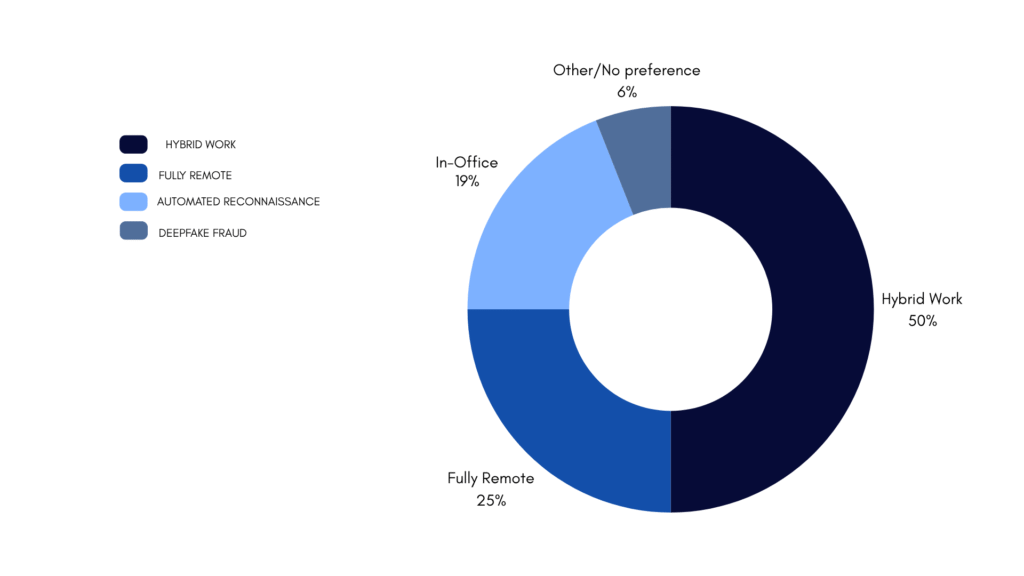
Data Source: Robert Half, Job Seeker Preferences Survey, H2 2025
The Collaboration Gap in a Boundaryless World
While the transition to digital-first operations has been swift, it has also created a significant “collaboration gap.” We have the tools, but we often lack the cohesive strategy to use them effectively. In what Deloitte terms a “boundaryless world,” teams are distributed across time zones, projects are managed on disparate platforms, and communication is scattered across a dozen channels. This fragmentation creates an environment where critical information is easily lost, tasks fall through the cracks, and workflows become disjointed.
The result is a system where, despite an abundance of technology, productivity suffers. The very tools designed to connect us can inadvertently foster silos. For instance, a project update shared in a Slack channel may never reach the relevant Trello board, or a key decision made on a Zoom call might not be documented in the shared Google Drive. This gap isn’t a technological failure; it’s a process and coordination failure. It highlights the urgent need for a new kind of role—one dedicated to orchestrating these digital workflows and ensuring seamless, human-centric collaboration. This is precisely the void that the modern, strategic Virtual Assistant has come to fill.
New Flexible by Experience (Q2 2025)
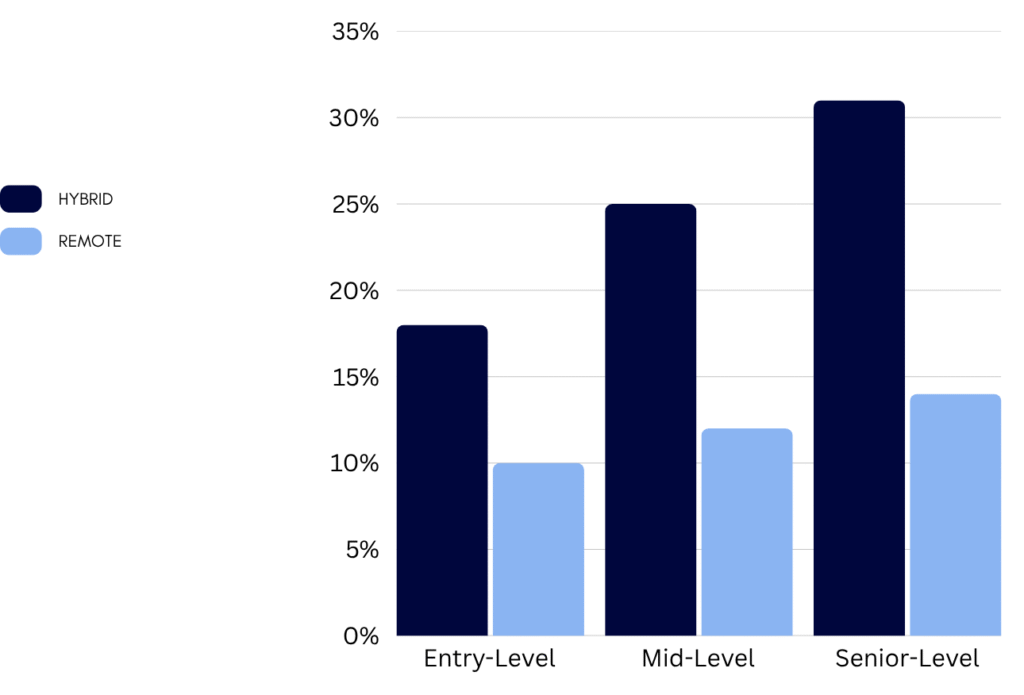
Data Source: Robert Half, Analysis of New Jobs, Q2 2025
The Strategic VA: Driving Efficiency and Growth in a Digital-First World
The term “Virtual Assistant” no longer does justice to the role’s modern scope. The perception of a VA as someone who merely handles emails and schedules appointments is outdated. Today’s VAs are strategic partners and specialized professionals. As noted by Ocean Virtual Assistant, the role has evolved to encompass a wide spectrum of responsibilities, including project management, social media strategy, technical support, and digital marketing. This evolution is driven by a key trend: “Niche Specialization.” Businesses are no longer seeking generalists but are hiring VAs with deep, industry-specific expertise. According to Wishup.co, founders now plug in VAs who already speak their industry’s language—be it e-commerce, healthcare, or legal—enabling them to deliver immediate impact with minimal training.
The shift towards hiring VAs is underpinned by a compelling, data-driven business case that extends far beyond simple convenience. The benefits are quantifiable and directly impact a company’s bottom line and operational agility.
Quantifiable Business Impact of Virtual Assistant
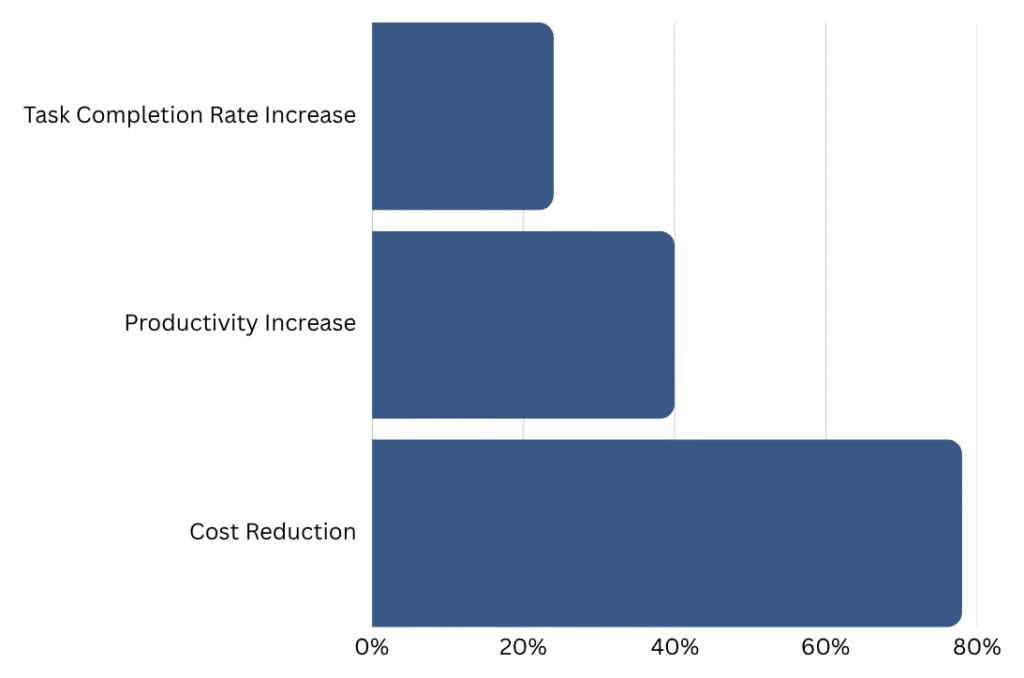
Data Sources: Scoop.market.us, There is Talent (Forbes), VirtualEdgePro
- Cost-Effectiveness and Scalability: The financial argument is one of the strongest. Businesses can achieve cost reductions of up to 78% by hiring VAs, as this model eliminates overheads associated with in-house employees, such as office space, benefits, and equipment Scoop.market.us, . This lean approach provides unparalleled flexibility, allowing companies to scale support up or down based on project demands without the long-term financial commitment of a full-time hire, as highlighted by Productive Therapist.
- Productivity and Strategic Focus: The impact on productivity is profound. A study cited by There is Talent found that outsourcing administrative tasks to VAs can increase a company’s productivity by up to 40%. This is because it frees up business owners and their core teams from time-consuming, low-impact work. By delegating these responsibilities, leaders can reclaim their schedules to focus on what truly matters: strategy, innovation, and high-value growth activities MySigrid,
Case Study: How a VA Transformed a Growing Business
To illustrate the tangible impact of a strategic VA, consider this synthesized example based on real-world success stories.
The Challenge: A burgeoning e-commerce business was hitting a wall. The founder was overwhelmed, spending most of their day managing customer inquiries, manually tracking inventory, and trying to coordinate a disorganized project workflow. As a result, order processing was slow, customer satisfaction was declining, and strategic growth initiatives were perpetually on the back burner .
The Solution: The company hired a specialized e-commerce VA to act as a central operational hub. The VA took complete ownership of the customer service inbox, implemented an inventory tracking system, organized all project tasks and deadlines in Asana, and streamlined the founder’s calendar. This single move created a clear, centralized system for operations.
The Measurable Outcome: The results were transformative. Within six months, the business achieved a 50% increase in sales due to faster, more professional customer service. Project completion rates improved by 24%, and the founder freed up over 15 hours per week. They reinvested this time into securing new strategic partnerships, which led to a significant increase in overall revenue (Synthesized from data by Ocean Virtual Assistant, VirtualEdgePro, and VATalks).
The Future of Collaboration: Human-AI Synergy and the “Agentic” VA
The future of virtual assistance is not a battle of human versus machine; it’s a dynamic partnership. The most effective VAs are now evolving into “AI-powered” collaborators. They are no longer just *using* digital tools; they are actively leveraging artificial intelligence to augment their capabilities and deliver unprecedented levels of efficiency. As BELAY Solutions describes it, this represents “Virtual Assistant 2.0,” a synergy where human intelligence and AI capabilities merge.
In this model, AI excels at handling repetitive, data-intensive tasks with speed and precision. For example, an AI tool like Fireflies.ai can transcribe and summarize an hour-long meeting in minutes, while automation platforms like Zapier can create complex workflows that sync data across multiple applications without manual intervention. This frees the human VA to focus on higher-value work that requires critical thinking, strateg
Looking further ahead, we see the emergence of “Agentic AI”—a groundbreaking form of artificial intelligence. Unlike current AI, which primarily responds to commands, agentic systems are designed with a degree of autonomy. They can perceive their environment, reason through problems, create a plan, and execute complex, multi-step tasks without constant human supervision Verint, .
As this technology matures, the VA’s role will undergo another profound shift. They will evolve from being a “doer” of tasks to a “manager” and “orchestrator” of AI agents. In this future scenario, a VA might be responsible for designing, deploying, and overseeing a team of specialized AI agents to achieve a business goal. For instance, they could task one agent with market research, another with lead generation, and a third with drafting initial marketing copy. As one expert in BizTech Magazine puts it, “the next frontier is agentic AI, which are systems that not only assist users but also collaborate with other AI agents to execute complex tasks.” The VA will be the human strategist at the center, ensuring these autonomous systems are aligned with the company’s objectives and ethical guidelines.
This evolution aligns perfectly with macro trends identified in the World Economic Forum’s Future of Jobs Report 2025. The report identifies technology, particularly AI, as the primary catalyst for labor market transformation, predicting that 39% of workers’ core skills will be disrupted by 2030. In such an environment, purely technical or repetitive skills will be increasingly automated. The most valuable and resilient skills will be those that are uniquely human: creative thinking, resilience, flexibility, leadership, and social influence.
The AI-augmented VA embodies this future-proof professional. They combine deep technological proficiency with the indispensable human capabilities required to navigate a complex, automated world. They are not being replaced by AI; they are being empowered by it, positioning them at the very forefront of the future of work.
The complexity of the modern remote workplace is not a problem to be solved with more software, but an opportunity to be seized with smarter, human-led integration. The evidence is clear: Virtual Assistants have evolved far beyond their administrative origins to become the indispensable orchestrators of digital collaboration. They are the strategic partners who transform fragmented toolchains into seamless, efficient ecosystems.
By taking on the critical work of coordination, leveraging AI to amplify productivity, and streamlining cross-platform workflows, VAs do more than just make remote work possible—they make it a powerful competitive advantage. They empower leaders to escape the weeds of daily operations and focus on growth. They enable teams to be more agile, scalable, and resilient in a world defined by constant change.
Ready to move beyond tool fatigue and build a truly connected, productive remote team? It’s time to integrate a strategic Virtual Assistant into your operations and future-proof your business.
At DBPSC Global Solutions, we specialize in providing highly skilled Virtual Assistants who deliver efficiency, consistency, and strategic support tailored to your organization’s goals. Our team ensures seamless collaboration, optimized processes, and sustained productivity across all areas of your operations.
Visit DBPSC Global Solutions to strengthen your workforce, streamline your systems, and position your business for long-term growth and success.
Contact Us
Please fill out the form below to get in touch.