
Intelligent Growth through
Automation
explores how businesses can achieve sustainable scalability by combining AI-driven automation with skilled human expertise. This approach empowers teams to work smarter, streamline operations, and unlock higher-value growth opportunities without increasing workload.
The artificial intelligence shift isn’t coming—it’s already here, fundamentally reshaping how businesses operate. While headlines often focus on disruption, the real, tangible opportunity lies in how lean, adaptive teams are scaling smarter. They are achieving this not by chasing every new AI tool, but by strategically combining automation with skilled human oversight.
If you’re building a startup, a consultancy, or a cross-functional team, your competitive edge won’t come from mastering every AI model yourself. It will come from designing intelligent systems that work for you.
This is where outsourced Virtual Assistance (VA) and Business Process Management (BPM) transcend traditional cost-saving roles to become strategic enablers of organizational growth and innovation, as emphasized by Davenport (2018).
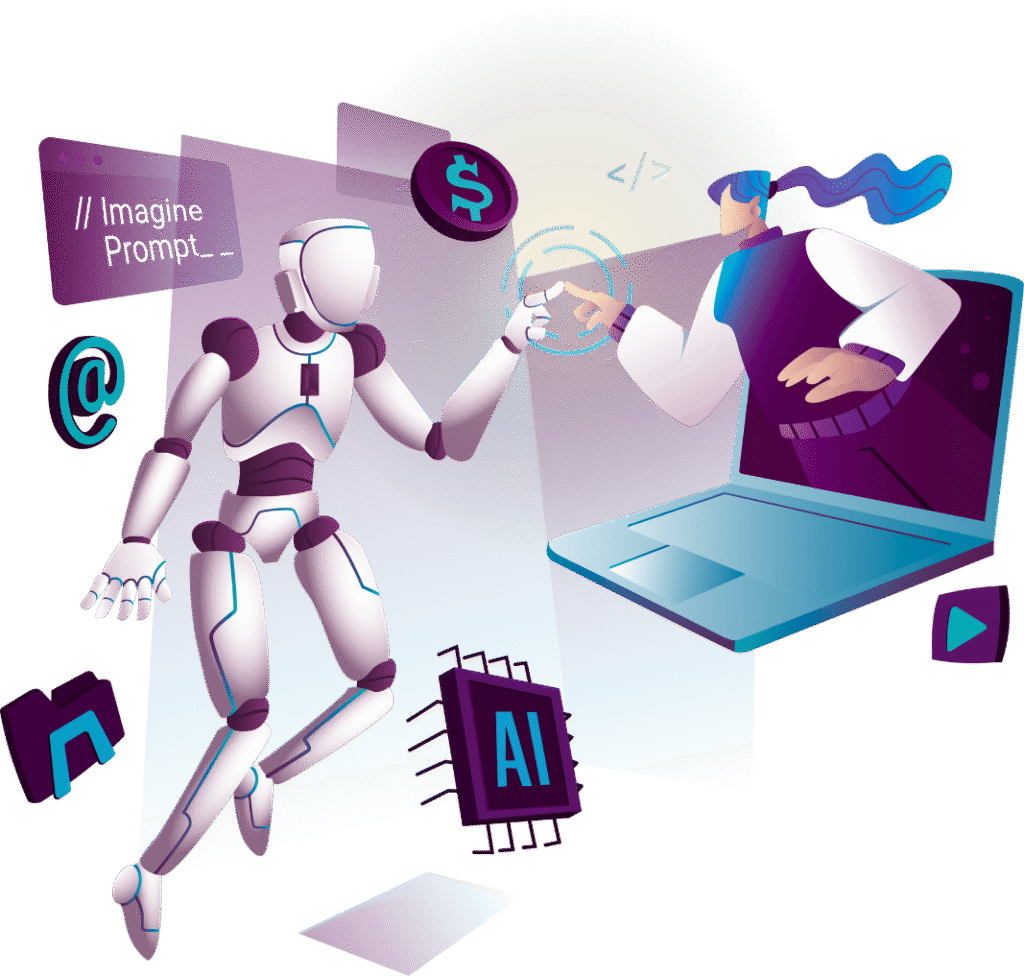
The New Operating Reality:
Beyond AI Hype
Across industries, AI is actively changing daily workflows. Inbox management is becoming semi-automated with smart filters and draft replies. Initial contract reviews now often begin with GPT-powered summaries that flag key clauses. New employee and client onboarding flows are guided by bots and conditional logic, ensuring consistency and speed.
But AI alone is not a panacea. It lacks the nuanced understanding of human relationships, the ability to read between the lines of stakeholder communication, and the contextual awareness needed for true operational continuity. According to a report by McKinsey (2023), while AI adoption is widespread, realizing its full value requires integrating it into workflows in a way that complements human skills. A well-trained VA or a dedicated BPM partner fills this critical gap, providing the precision, judgment, and context that pure automation cannot.
The Evolution of Assistance:
VAs as AI-Enabled Operators
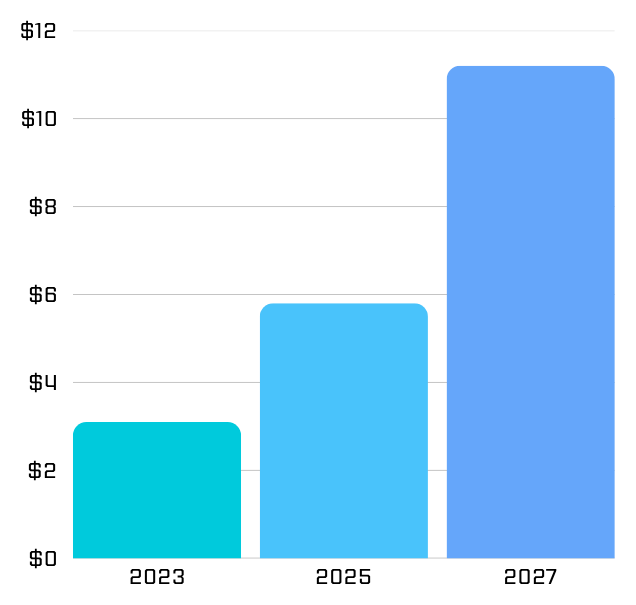
The role of the Virtual Assistant has undergone a profound transformation. The modern VA is no longer a simple task-taker who just checks items off a list. They are evolving into system extenders—operators who manage, refine, and enhance the automated systems you build. The global VA market is a testament to this shift, with a significant growth projected as businesses seek more sophisticated, integrated support (Grand View Research, 2023).
When trained to leverage a suite of AI tools—from prompt-based drafting and CRM automation to complex workflow coordination—VAs become hybrid operators who amplify your team’s capabilities. This synergy unlocks a new level of efficiency, as highlighted by Jarche (2020), who emphasizes the importance of human-centered work in an increasingly automated world.
From Delegation to Orchestration
Consider these real-world applications where a VA acts as an AI-powered orchestrator:
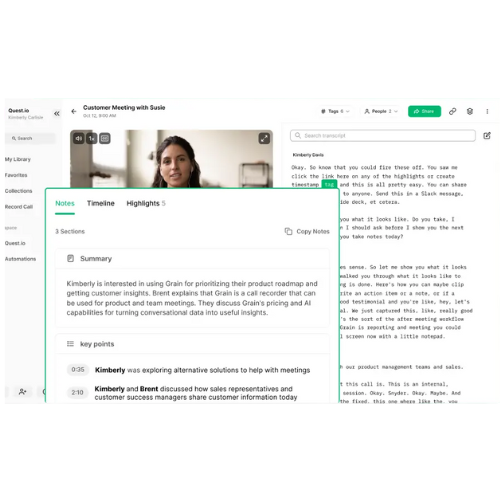
Inbox Triage
An AI tool scans and summarizes incoming emails, tagging them by priority (e.g., “Urgent,” “Client Inquiry,” “Internal”). The VA then reviews these summaries, adds contextual notes based on their knowledge of your business, and executes the appropriate action—delegating, drafting a personalized reply, or scheduling a meeting.
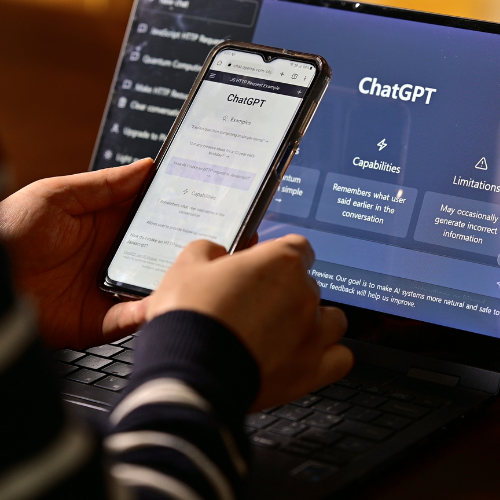
Contract Preparation
Instead of starting from scratch, a VA uses a GPT-based tool to extract key clauses, dates, and obligations from a draft agreement. The AI flags potential risks or deviations from standard templates. The VA then performs the crucial final review, ensuring alignment with compliance standards and business goals.
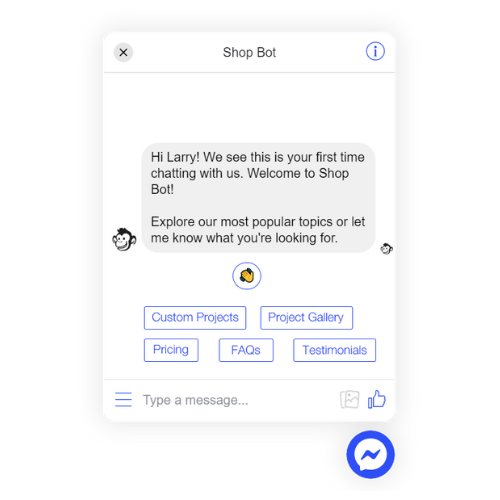
Client Onboarding
An automated sequence sends welcome emails, training materials, and initial questionnaires. The VA monitors the process, stepping in with a personal touch to answer specific questions, adjust the timing based on the client’s engagement, and ensure a smooth, high-touch experience where it matters most.
This isn’t just delegation; it’s orchestration. You’re not just offloading tasks; you’re empowering a partner to manage an intelligent system that delivers consistent, high-quality results.
A Modular Framework for Sustainable Growth
Adopting this new model doesn’t require a complete overhaul of your operations. Forward-thinking teams are using a proven, modular framework to build their delegation architecture incrementally. This approach is about creating a living system that evolves with your business, a principle echoed in the work of Hammer and Champy (1993) on business process reengineering.
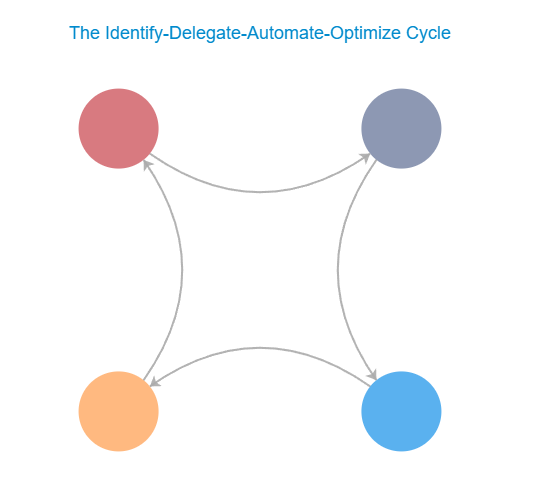
The Four-Step Cycle to Building Your System
1. Automate: Work with your VA to integrate AI tools where speed, precision, and data processing are paramount. This includes tasks like drafting initial content, summarizing long documents, tagging data in your CRM, or scheduling social media posts.
2. Delegate: Assign ownership of these workflows to a VA or BPM partner. Provide them with clear Standard Operating Procedures (SOPs), key objectives, and the necessary stakeholder context to make informed decisions.
3. Automate: Work with your VA to integrate AI tools where speed, precision, and data processing are paramount. This includes tasks like drafting initial content, summarizing long documents, tagging data in your CRM, or scheduling social media posts.
4. Optimize: This is the most critical step. Establish a weekly or bi-weekly feedback loop. Review the outputs, refine the AI prompts, adjust the tone of automated communications, and ensure the results consistently align with audience expectations and business goals.
This cycle is not a one-time setup. It is a dynamic process of continuous improvement, with your VA acting as the steward of the system, ensuring it remains efficient and aligned with your strategic priorities.
Case Study
How a Digital Marketing Agency Scaled Operations
A mid-sized digital marketing agency was struggling with operational bottlenecks. Their small team spent over 15 hours per week on administrative tasks, including client reporting, social media scheduling, and initial lead qualification. This left little time for strategic planning and creative campaign development.
By implementing the Identify-Delegate-Automate-Optimize framework, they achieved the following:
- Orchestrated & Optimized: The VAs reviewed the AI-generated reports for accuracy and added personalized, client-specific insights—the crucial human touch. They refined social media copy to match each client’s brand voice and scheduled it for approval.
- Identified & Delegated: They mapped out their client reporting and social media content workflows and delegated them to a BPM partner with two specialized VAs.
- Automated: The VAs integrated an AI tool to pull performance data from Google Analytics and social platforms, automatically generating draft reports. They also used a prompt-based AI to create initial social media copy from approved blog content.
The results were measurable within the first quarter:
- Time Savings: Administrative workload was reduced by 80%, freeing up approximately 12 hours per week for the core team.
- Increased Output: The agency doubled its social media content output without hiring additional full-time staff.
- Faster Reporting: Client report delivery time was reduced from three days to one, improving client satisfaction.
This case study demonstrates how a strategic blend of skilled VAs and AI automation doesn’t just save time—it creates new capacity for growth and enhances service quality.
Why This Matters: The Compounding Value of Smart Delegation
What is scalable is designing a delegation architecture that absorbs complexity and delivers clarity.
Many teams are still in a reactive mode with AI—scrambling to learn every new tool and chase every software update. This approach is stressful, inefficient, and ultimately not scalable. It creates pockets of productivity but fails to build a resilient operational foundation.
Outsourced VAs and BPM partners, trained to operate at the intersection of human expertise and AI efficiency, are the bridge between your vision and its execution. The impact of this model extends far beyond simple time savings. By automating repeatable tasks, businesses can free up significant human capital to focus on high-value activities like strategy, innovation, and client relationships. Studies have consistently shown the immense potential for automation to boost productivity across various functions. (McKinsey Global Institute, 2017).
Potential Time Saved by Automating Repeatable Tasks
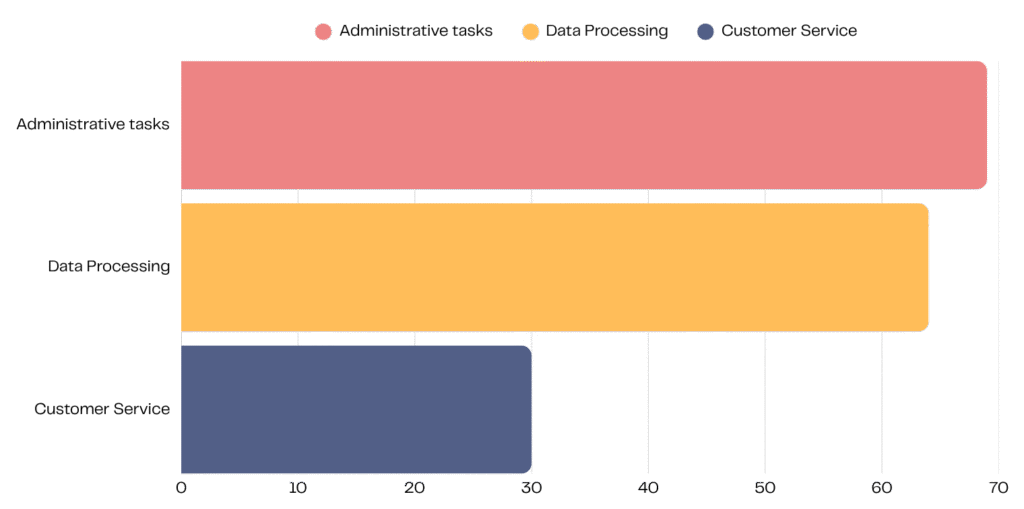
Data adapted from McKinsey Global Institute analysis on automation potential.
By building a system that combines human oversight with AI automation, you are not just saving time; you are compounding it. Each optimized process frees up more capacity for strategic work, creating a virtuous cycle of growth and innovation, as described in Brynjolfsson and McAfee’s (2017) work on the new rules of automation.
Ready to Build Your Delegation Architecture?
If you’re ready to move beyond reactive task management and start building a scalable operating system for your business, the time is now. Delegate with precision, automate with confidence, and grow without the friction of manual overload.
Our team is here to help you map out your unique delegation architecture. Explore our Virtual Assistance and Business Process Management solutions, or book a free consultation to discover how you can build systems that work, so you can focus on what matters most.