
Isn’t it time we measure success by impact, not hours?
Imagine a world where you could accomplish more in fewer hours. It sounds like a counterintuitive dream, but research shows it’s not only possible – it’s a powerful strategy to boost productivity. “What if working fewer hours could actually help you accomplish more?” you might ask. The idea goes against the grain of our culture’s emphasis on long hours and constant hustle, but studies are beginning to back it up. For example, in one large trial of a four-day workweek, participants reported higher well-being and productivity without any drop in output .

This seems almost paradoxical: working less to get more done. But it’s a reality that savvy professionals are embracing. Productivity isn’t about doing more; it’s about doing better. We’ll explore why longer hours don’t always equal better results, how working smarter (and resting more) can improve outcomes, and most importantly, how virtual assistants can help you offload the tasks that drain your time so you can focus on what truly matters – growing your business, achieving your goals, and even having some time for yourself. Let’s dive in and uncover the secrets of the productivity paradox.
Why More Hours Don’t Equal More Results
It’s a common belief that if you want to get more done, you should just work longer hours. The longer you put in, the more you’ll achieve, right? Well, research suggests this isn’t always the case. In fact, there’s a point where working more hours can reduce your overall productivity. This phenomenon is often referred to as the “diminishing returns of long workdays.” The human brain and body simply aren’t designed to sustain intense mental effort for endless hours on end. As you work more, your efficiency and output start to plateau – and eventually decline. “Productivity per hour declines after employees work more than 50 hours per week,” according to a study by Stanford University . In other words, beyond a certain threshold, putting in extra hours doesn’t yield proportional gains. In one notable analysis, output per hour actually dropped so much after 50 hours that someone working 70 hours ended up producing virtually the same total output as someone working only 55 hours (Kreuger, 2014) . You could be spending two extra hours a day getting nothing more done. In short, working more can actually make you less valuable, especially if it leads to mistakes and burnout.
So why does this happen? First, fatigue is a major culprit. When you’re tired, your concentration and decision-making suffer. A tired brain is slow and error-prone. But it’s not just physical; it’s also mental fatigue. After hours of focus, your brain gets overwhelmed. Studies confirm that mental fatigue significantly impairs cognitive performance, leading to more mistakes and difficulty with complex problems. Then there’s decision fatigue. Every choice you make drains your mental energy. The more decisions you make, the worse they get. As one source explains, decision fatigue can lead to subpar choices and even burnout as your brain struggles to keep up. This is why long hours can paradoxically result in lower quality work—you’re simply not thinking as clearly.

Stress is another hidden productivity killer. High stress from long hours can cause burnout, which is characterized by emotional exhaustion and reduced effectiveness. Research has found that employees with clinical burnout show a greater decline in cognitive performance during sustained tasks. Essentially, if you’re burned out, you can’t concentrate, and your work suffers. As one expert puts it, burnout undermines innovation, decision-making, and morale, especially in high-pressure jobs. A tired, stressed worker is not only less productive but also less creative. It’s a costly paradox: you spend more time at work, but you get less done and suffer in the process.
So, what’s the alternative? It’s not about being lazy—it’s about working smarter. By understanding the diminishing returns of long workdays, you can see that productivity isn’t about how many hours you log, but how you use them. In the next section, we’ll explore how working less can actually lead to more results.
The Secret Behind the Productivity Paradox
The secret to the productivity paradox is simple: better rest and fewer hours force you to focus on what truly matters. When you have less time, you have to prioritize and cut out distractions. This focus can dramatically increase your output. If you have to finish a project in four days instead of five, you’ll find ways to be more efficient. You won’t have time for busywork. By cutting low-value tasks and resting more, you create space for high-impact work.
First, better rest is crucial. Regular breaks and enough sleep improve your mental sharpness. A growing body of research shows that shorter workweeks can boost productivity and well-being. For example, a six-month trial in New Zealand found that employees were just as productive working 20% less time, with lower stress and better work-life balance. The largest-ever trial of a four-day workweek confirmed these findings, showing that participants were happier and just as productive. The study concluded that a four-day workweek does not reduce labor productivity and may even increase it. In Iceland, where trials were an “overwhelming success,” nearly 90% of the workforce now has shorter hours. These examples prove that rest isn’t a productivity killer—it’s a booster.
Second, cutting low-value tasks creates room for high-impact work. Many of us spend too much time on “busy work” like trivial emails or unproductive meetings. For instance, an average worker spends about 2.6 hours a day on email. That’s nearly 13 hours a week! One entrepreneur saved about 12 hours per week by outsourcing her inbox to a virtual assistant, freeing her up for strategic planning. Similarly, a consultant who hired a VA for social media management reclaimed 32 hours a month to meet with clients. These stories show that cutting low-value tasks creates room for high-impact work. Instead of wasting time on busywork, you can focus on what truly advances your goals.
Working less also reduces mistakes and burnout. A shorter workweek can improve the quality of work and innovation. When people are well-rested, they think more creatively. Additionally, presenteeism—being at work but not engaged—becomes less of an issue.
Employee Outcome in 4-Day Workweek Trials
Percentage of employees reporting positive outcomes
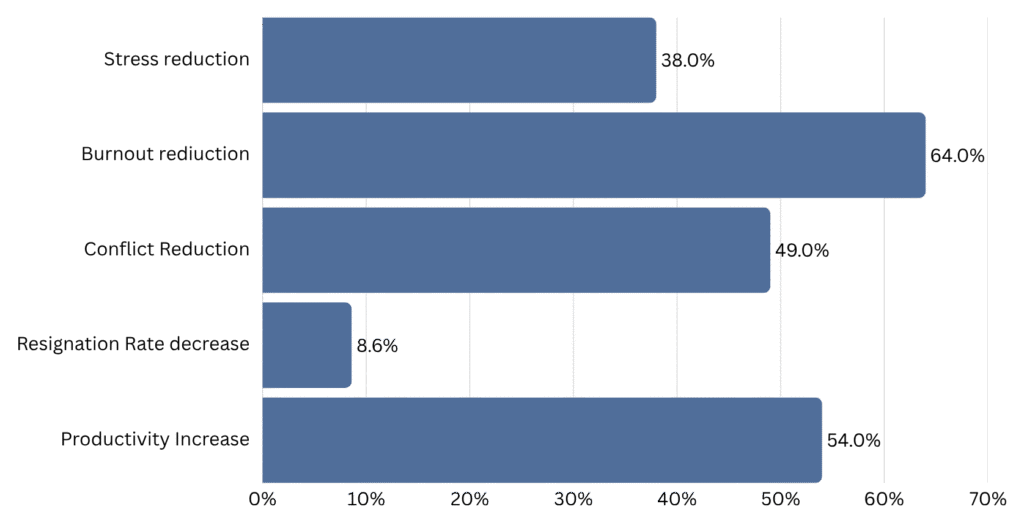
University of Cambridge. (2023). Findings from world’s largest four-day working week trial.
A tired employee might look productive, but their output suffers. By reducing work hours, you ensure that when people are working, they’re actually working. This leads to better outcomes and can even increase innovation by giving people time to think differently.
In summary, the secret is quality over quantity. Working fewer hours forces you to be more strategic and effective. In the next section, we’ll explore a practical tool to help you achieve this: virtual assistants.
How Virtual Assistants Make “Working Less” Possible
Virtual assistants (VAs) are a game-changer for working smarter. A VA is an outsourced professional who handles tasks remotely, from admin duties to customer support. By hiring a VA, you can cut your own hours while keeping your business running smoothly. Let’s see how VAs help you offload tasks and achieve more by working less.

First, VAs let you offload low-value tasks. Think about all the routine things you do daily—managing your inbox, scheduling, data entry. These are necessary but not strategic. By assigning them to a VA, you free up time for high-value activities. For example, an average professional spends about 13 hours a week on email. A VA can filter emails and draft replies, saving you significant time. One business owner reported saving around 12 hours weekly, which she used for strategic planning. Another time-consuming task is calendar management.
A VA can handle scheduling and reminders, reducing your stress. Data entry is another area where VAs excel. By delegating these tasks, one entrepreneur was able to scale her business from 5 to 15 clients in six months without working more hours. This shows how a VA can dramatically increase your capacity.
Effective delegation is key. It’s about strategically aligning your time with your highest-value activities. A VA handles the busywork so you can focus on sales, strategy, or innovation. Imagine you’re a CEO spending hours on admin tasks. A VA can manage your schedule and emails so you can lead the company. One executive did just that, delegating research to a VA, which allowed her to focus on strategy and launch two successful products in one year. She accomplished more by working less on trivial tasks. You’re not just reducing your workload; you’re redistributing your time to where it yields the greatest return.
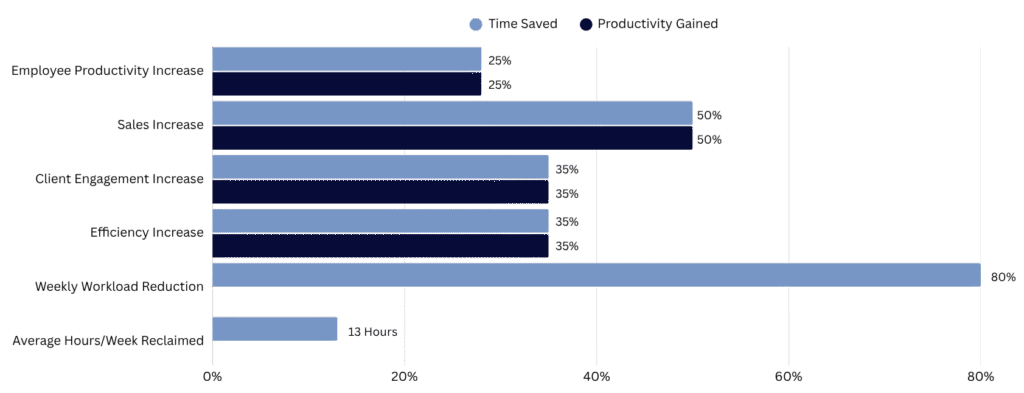
A VA also helps you work smarter, not longer. They use technology to streamline processes, making your work more efficient. A digital marketing agency that hired two VAs saw a 35% increase in client engagement and was able to expand its client base by 20%. The owners could focus on business development instead of daily tasks. This demonstrates that with a VA, you can increase output without increasing your own hours.
The time savings are significant. Entrepreneurs who delegate to VAs regain an average of 13–15 hours per week. That’s almost an extra workday! Another study found that companies saw a 35% increase in efficiency when VAs managed routine tasks. The chart below shows the impressive time savings and productivity improvements businesses can achieve with VAs.
Time Savings and Productivity Gains with Virtual Assistants
Beyond time and efficiency, VAs also improve your well-being. By offloading tasks, you can reduce stress and avoid burnout. In one survey, 32% of users hired a VA to “reduce stress,” and 28% did so to “improve work-life balance.” When you’re not overwhelmed, you can approach your work with a clearer mind and more creativity.
We’ve explored the powerful idea that productivity isn’t about squeezing more hours into your day—it’s about designing smarter workflows. The productivity paradox shows that working less can lead to more results when you focus on quality. By understanding the diminishing returns of long hours and the importance of rest, you can shift your approach to work. The evidence is clear: shorter workweeks and better rest improve well-being and productivity.
The secret is working smarter, not harder. When you eliminate tasks that don’t contribute to your goals, your output increases. Virtual assistants are a powerful tool for this. By delegating routine tasks, you can focus on high-impact activities. This not only boosts your productivity but also your quality of life. Remember, productivity isn’t about how many hours you log, but how you use those hours. By offloading low-value tasks, you can transform your workday.
Work smarter. Get more done. Live better.

So, ask yourself: are you spending too much time on tasks that don’t move the needle? If so, it might be time to embrace the productivity paradox. Identify the tasks you can delegate and find a Virtual Assistant to take them off your plate. Studies show that businesses utilizing VAs report an average of 78% cost savings on operational expenses—freeing both time and resources for higher-value work.
If you’re ready to work less but achieve more, a Virtual Assistant can help you unlock that potential. By delegating and focusing on what you do best, you’ll not only accomplish more—you’ll also rediscover balance, clarity, and purpose in your work.
At DBPSC Global Solutions, we provide dedicated and highly trained Virtual Assistants who help streamline your operations, optimize productivity, and support sustainable business growth.
Visit DBPSC Global Solutions today to discover how strategic delegation can transform your workflow—and help you achieve more by doing less.
Contact Us
Please fill out the form below to get in touch.